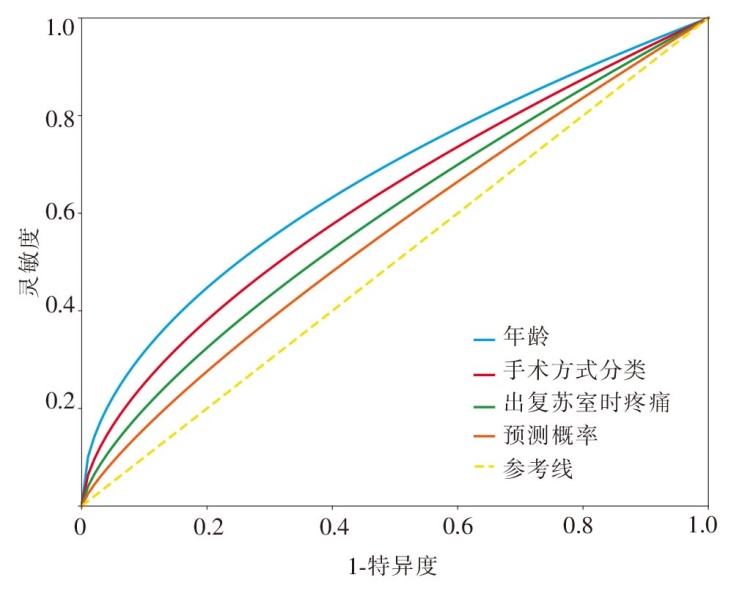
| [1] |
国家卫生健康委办公厅. 原发性肺癌诊疗指南(2022年版)[J]. 协和医学杂志, 2022, 13(4):549-570.
|
|
General Office of the National Health Commission. Clinical practice guideline for primary lung cancer(2022 version)[J]. Med J Peking Union Med Coll Hosp, 2022, 13(4):549-570.
|
| [2] |
Liu YH, Xiao SS, Yang HK, et al. Postoperative pain-related outcomes and perioperative pain management in China:a population-based study[J]. Lancet Reg Health West Pac, 2023, 39:100822.
|
| [3] |
姚丽, 郑娥, 杨梅, 等. 基于患者报告结局的胸腔镜肺癌切除术后患者症状调查[J]. 中国胸心血管外科临床杂志, 2023, 30(1):84-88.
|
|
Yao L, Zheng E, Yang M, et al. A survey of symptoms after thoracoscopic lung cancer resection based on patient-reported outcomes[J]. Chin J Clin Thorac Cardiovasc Surg, 2023, 30(1):84-88.
|
| [4] |
Makkad B, Heinke TL, Sheriffdeen R, et al. Practice advisory for postoperative pain management of cardiac surgical patients:a report by society of cardiovascular anesthesiologists[J]. J Cardiothorac Vasc Anesth, 2025, 39(3):770-784.
doi: 10.1053/j.jvca.2024.10.014
|
| [5] |
黎辉, 贺雨欣, 尚晶晶, 等. 胸腔镜肺癌切除术后患者疼痛护理需求的潜在类别分析[J]. 护理学杂志, 2024, 39(19):35-39.
|
|
Li H, He YX, Shang JJ, et al. The latent categories of pain care needs in patients after thoracoscopic lung cancer resection[J]. J Nurs Sci, 2024, 39(19):35-39.
|
| [6] |
王楠, 李巍, 王思睿, 等. 肺癌患者胸腔镜术后疼痛与应对策略的研究进展[J]. 国际护理学杂志, 2025, 44(11):2097-2101.
|
|
Wang N, Li W, Wang SR, et al. Research progress on pain and coping strategies after thoracoscopy for lung cancer[J]. Int J Nurs, 2025, 44(11):2097-2101.
|
| [7] |
宋晓冰. 胸腔镜术后患者急慢性疼痛的影响因素研究[D]. 唐山: 华北理工大学, 2023.
|
|
Song XB. Study on the influencing factors of acute and chronic pain in patients after video-assisted thoracoscopic surgery[D]. Tangshan: North China University of Science and Technology, 2023.
|
| [8] |
储勤军, 陈向东, 彭云水, 等. 成人术后疼痛管理临床实践指南(2024版)计划书[J]. 中华麻醉学杂志, 2024, 44(9):1069-1074.
|
|
Chu QJ, Chen XD, Peng YS, et al. Protocol for clinical practice guidelines for postoperative pain management in adults(2024 edition)[J]. Chin J Anesthesiol, 2024, 44(9):1069-1074.
|
| [9] |
宋学军, 樊碧发, 万有, 等. 国际疼痛学会新版疼痛定义修订简析[J]. 中国疼痛医学杂志, 2020, 26(9):641-644.
|
|
Song XJ, Fan BF, Wan Y, et al. A brief analysis of the revision of the new definition of pain in the International Pain Society[J]. Chin J Pain Med, 2020, 26(9):641-644.
|
| [10] |
张馨元, 张小红, 陈经欣, 等. 胸腔镜肺癌切除术后疼痛相关患者报告结局与恐动水平的关系[J]. 护理学杂志, 2022, 37(17):28-31.
|
|
Zhang XY, Zhang XH, Chen JX, et al. Association between pain-related patient-reported outcomes and kinesiophobia level in patients after video assisted thoracoscopic surgery for lung cancer[J]. J Nurs Sci, 2022, 37(17):28-31.
|
| [11] |
van Smeden M, Moons KG, de Groot JA, et al. Sample size for binary logistic prediction models:Beyond events per variable criteria[J]. Stat Methods Med Res, 2019, 28(8):2455-2474.
doi: 10.1177/0962280218784726
|
| [12] |
韩娜菲, 贺红, 袁华娣, 等. 日间肺癌手术患者出院后症状纵向变化及护理对策研究[J]. 中华护理杂志, 2025, 60(4):432-438.
doi: 10.3761/j.issn.0254-1769.2025.04.007
|
|
Han NF, He H, Yuan HD, et al. Longitudinal changes of symptoms and nursing strategies of patients under daytime lung cancer surgery after discharge[J]. Chin J Nurs, 2025, 60(4):432-438.
doi: 10.3761/j.issn.0254-1769.2025.04.007
|
| [13] |
Makkad B, Heinke TL, Sheriffdeen R, et al. Practice advisory for postoperative pain management of thoracic surgical patients:a report from the society of cardiovascular anesthesiologists[J]. J Cardiothorac Vasc Anesth, 2025, 39(5):1306-1324.
doi: 10.1053/j.jvca.2024.12.004
|
| [14] |
Feray S, Lubach J, Joshi GP, et al. PROSPECT guidelines for video-assisted thoracoscopic surgery:a systematic review and procedure-specific postoperative pain management recommendations[J]. Anaesthesia, 2022, 77(3):311-325.
doi: 10.1111/anae.v77.3
|
| [15] |
豆丽园, 蒋秋玲, 申文佳, 等. 晚期肺癌患者疼痛危象发生现状及影响因素研究[J]. 中华护理杂志, 2024, 59(11):1353-1359.
doi: 10.3761/j.issn.0254-1769.2024.11.010
|
|
Dou LY, Jiang QL, Shen WJ, et al. Status quo and influencing factors of pain crisis in advanced lung cancer patients[J]. Chin J Nurs, 2024, 59(11):1353-1359.
doi: 10.3761/j.issn.0254-1769.2024.11.010
|
| [16] |
成燕, 童莺歌, 刘敏君, 等. 术后活动性疼痛护理评估对疼痛管理质量的影响[J]. 中华护理杂志, 2015, 50(8):924-928.
|
|
Cheng Y, Tong YG, Liu MJ, et al. Effect of nursing practice of dynamic pain assessment on the quality of postoperative pain management[J]. Chin J Nurs, 2015, 50(8):924-928.
|
| [17] |
何爽, 杨慧, 陈瑞云, 等. 胸外科患者围手术期疼痛管理的最佳证据总结[J]. 中国实用护理杂志, 2025, 41(9):657-663.
|
|
He S, Yang H, Chen RY, et al. Summary of the best evidence for perioperative pain management in thoracic surgery patients[J]. Chin J Pract Nurs, 2025, 41(9):657-663.
|
| [18] |
卢婕楠, 徐彩娟, 陈洁, 等. 活动性疼痛管理在肝胆胰加速康复外科中的应用[J]. 护理与康复, 2021, 20(3):65-68.
|
|
Lu JN, Xu CJ, Chen J, et al. Application of active pain management in enhanced recovery after surgery for hepatobiliary and pancreatic surgery[J]. J Nurs Rehabil, 2021, 20(3):65-68.
|
| [19] |
张雯, 邱欢, 魏贤, 等. 肺癌患者VATS术后运动恐惧与疼痛应对策略的潜在剖面分析[J]. 现代医学, 2025, 53(8):1239-1247.
|
|
Zhang W, Qiu H, Wei X, et al. Kinesiophobia and pain coping strategies in lung cancer patients after VATS:a latent profile analysis[J]. Mod Med J, 2025, 53(8):1239-1247.
|
| [20] |
王君慧, 董翠萍, 曾莹, 等. 基于疼痛轨迹的时点匹配预防性镇痛在胸腔镜肺癌手术患者中的应用[J]. 护理学杂志, 2024, 39(12):1-5.
|
|
Wang JH, Dong CP, Zeng Y, et al. Application of time-point matched preventive analgesia based on pain trajectory in patients undergoing thoracoscopic surgery for lung cancer[J]. J Nurs Sci, 2024, 39(12):1-5.
|
| [21] |
陈晨. 胸腔镜肺部分切除术后慢性疼痛发生情况及其影响因素研究[D]. 合肥: 安徽医科大学, 2023.
|
|
Chen C. Chronic pain occurred after video-assisted thoracoscope lung resection and influencing factors of research[D]. Hefei: Anhui Medical University, 2023.
|
| [22] |
易德发, 丁云礼, 汤海森. 胸腔镜辅助小切口肺癌根治术与胸腔镜肺楔形切除术治疗肺癌疗效研究[J]. 中国临床医生杂志, 2022, 50(12):1458-1460.
|
|
Yi DF, Ding YL, Tang HS. Study on curative effect of thoracoscopic assisted small incision radical resection of lung cancer and thoracoscopic wedge resection of lung cancer[J]. Chin J Clin, 2022, 50(12):1458-1460.
|
| [23] |
刘子策, 安奕, 李丽霞, 等. 术后疼痛与术后谵妄的研究进展[J]. 临床麻醉学杂志, 2025, 41(9):974-977.
|
|
Liu ZC, An Y, Li LX, et al. Research advances in postoperative pain and postoperative delirium[J]. J Clin Anesthesiol, 2025, 41(9):974-977.
|
| [24] |
周晓芸, 何敏芝, 周宁宁, 等. 胸腔镜肺癌根治术患者苏醒期躁动风险预测模型的构建与验证[J]. 中华护理杂志, 2025, 60(16):1989-1995.
doi: 10.3761/j.issn.0254-1769.2025.16.010
|
|
Zhou XY, He MZ, Zhou NN, et al. Construction and validation of a risk prediction model for emergence agitation in patients undergoing thoracoscopic radical resection of lung cancer[J]. Chin J Nurs, 2025, 60(16):1989-1995.
doi: 10.3761/j.issn.0254-1769.2025.16.010
|

 ), 阮晓芬1, 房丽丽2,*(